Friday, April 12, 2024

March 19 - Exploring Valparaiso


Our boutique hotel in Valparaíso - only for hours, before we left it because of the forest fire alarm and the Alpaca blanket allergies.
Maybe the Valpo Granma wasn't happy to have us there. :)

FROM: https://www.chile.travel/en/uncategorized/street-art-route-in-valparaiso-2/

In Alegre Hill, go up through Almirante Montt to see one of the most emblematic murals in Valparaíso. It’s the “La mamie de Valparaíso”, a grandmother watching over the city from the corner of a house, a piece created by the French collective Ella & Pitr.


Details of an old and rustic community.


Valparaíso has a lot of character. 
I absolutely loved getting lost on the steep and narrow streets and alleys with their colourful buildings.


Each corner is a surprise.


Harbour's kiss.


Cats and dogs are everywhere, just hanging out and making the places even more friendly and cool.


Succulent plants grow everywhere.


Each inch of city is colourful and invites you to just relax and enjoy it.


Going down, there is the harbour and the Plaza Sotomayor.

FROM WIKIPEDIA: https://en.wikipedia.org/wiki/Plaza_Sotomayor

The Plaza Sotomayor is a plaza in ValparaísoChile. It is named after Rafael Sotomayor. The square is lined by buildings occupying full block-fronts of the streets that flank it. The focus of the square is the monument that honors the Chilean sailors who fell during the Battle of Iquique and the Battle of Punta Gruesa. The plaza and surrounding buildings was designated a Zona Típica (historic district) on January 23, 1979. 

At the northeastern side of the square are two similar towers, which create a sort of gate entrance to the port from the city. On the opposite side is the building that housed the Intendencia de Valparaíso, which currently is home to the headquarters of the Chilean Navy. The building used by the CSAV and the building that houses the National Council of Culture and the Arts also face the plaza.

Close to the station is the western terminus station of the Valparaíso Metro, that replaced the old railway station.


FROM:https://valparaiso.com/en/tourist-attraction/port-of-valparaiso-2/

The Port of Valparaiso is the maritime terminal located in the city of the same name in the Region of Valparaiso, Chile. It is the port with the highest passenger arrivals in the country and the second one with the highest container movement, after San Antonio.
Annually it transfers more than 10 million tons of general cargo and over 30% of all the country's foreign trade passes through its terminals. Also, per season, it serves about 40 cruise ships and 100 thousand visitors.
The Port of Valparaiso can be divided into: the commercial port (mainly containerized cargo), the citizen port (cruises). Each of these activities has its own space, separated from the others, with facilities and specialized personnel.


What a face! 
This man - who gave me permission to photograph him - haunts me in a pleasant way. 
Every line of his face and hands make me wonder of the history he carries.


Classic.


The feeling I have here is that time has stop about 40 years ago. The clothes, the hair styles, the pace of living, people's behaviour. This photo captures a travel in time while being in real time. 
Would you believe if I said this has happened in the 80s? Well, it's today's photo, but it proves my lovely "stuck in time" feeling. 


FROM WIKIPEDIA: https://en.wikipedia.org/wiki/Valpara%C3%ADso

Because of the slopes of the hills, many of the surrounding areas of Valparaíso are inaccessible by public transport. That is why "elevators" serve the function of communicating the high part of the city with the plan, besides being a strong holiday highlight. The only elevator that can truly be called as such, is the Ascensor Polanco, because it is vertical. Meanwhile, the rest are cable cars but traditionally called elevators. Several of those funiculars – locally called ascensores – provide public transport service between the central area and the lower slopes of the surrounding hills, the first of which (Ascensor Concepción, also known as Ascensor Turri) opened in 1883, operated by steam, is still in service.The Cerro Cordillera elevator was built in 1887. As many as 28 different funicular railways have served Valparaíso at one time or another, of which 14 were still in operation in 1992 and still around 12 in 2010.

Valparaíso has fifteen lifts declared Historical Monuments by the National Monuments Council. Five are municipal property and the remaining belong to four private companies. The elevators are elevators municipal Baron, El Peral, Polanco, Queen Victoria and St. Augustine. As for the rest, lifts Florida, Butterflies and Nuns are owned by the National Elevator Company SA; Artillery, Concepción and Mountains belong to the Society of Mechanical Lifts Valparaíso Holy Spirit, Larraín and Villaseca (stopped for repairs) are the property of Valparaíso Elevators Company SA, and Dairy (stopped by fire) belongs to the Society of Dairy Cerro Lifts Ltd.

As a part of its 2003 declaration as a UNESCO World Heritage Site, Valparaíso has promised to replace and maintain its several funiculars. The funiculars were identified as an important cultural artifact.


More details of a rich history.


We took an awesome local tour - in English - explaining the city's history, influences and today's characteristics. I totally recommend a walking tour with a local because the person will help you navigate the streets and bring you so much information about that makes Valparaíso the cool city that it is today. 

Look at this building... an Yugoslavian architecture. Germans, British, Spanish, they all had their contribution to this eclectic mosaic. 


FROM BRITANNICA: https://www.britannica.com/biography/Violeta-Parra

Violeta Parra (born October 4, 1917, San Carlos, Chile—died February 5, 1967, Santiago) Chilean composer, folk singer, and social activist, best known as one of the founders of the politically inflected Nueva Canción (“New Song”) movement. In addition, she painted, wrote poetry, sculpted, and wove arpilleras (folk tapestries). Her best-known song, “Gracias a la Vida” (“Thanks to Life”), endures throughout the West as a beloved and poignant folk song.


Succulents growing everywhere.


A brief stop for a delicious home-made Chilean Alfajore. 
This lady and her family have been making this delicious Chilean sweet for over 20 years and selling them for tourists in one of the alleys. I tried one and bought 12!


Art is everywhere here and we have a feeling everyone is an artist too, even the dogs.  


Fifi got a free message from a wall: "That the waters of today be as clean as the waters of the past."


The famous Valparaíso Piano Stairs, on Beethoven Street.


The tour was over and our bellies were empty.
We stopped for lunch at this fancy restaurant with a view called La Concepción.
It was an opportunity to try a local beer from... Curacavi, the small town we stopped for lunch yesterday!


A must have while in Chile's coast: Ceviche. 

FROM: https://freshpressedoliveoil.com/explore/recipes/chilean-ceviche/

Ceviche (pronounced ceh-BEE-chay) is a popular appetizer in Chile, which boasts over 2,600 miles of Pacific coastline. The name comes from the Quechuan word siwichi, which translates to “tender fish.” Salmon can be substituted for white fish.

Ceviche recipes vary by region. Peru claims the origin of the dish to be nearly 2000 years ago in Lima.


After lunch  - or dinner - we  took the train to headed to the Baron Station. 
It is a 5 minutes ride from the main port, along the water.


Us exploring.


FROM: https://www.dreameratheart.org/things-to-do-in-valparaiso-chile-your-ultimate-guide/

Sea lions, pelicans and the sparkling ocean make this a worthwhile addition to your list of things to do in Valparaiso Chile. At Caleta Portales the sea lions fight each other to sunbathe on a large concrete structure just offshore. Watching them argue and try to jump up onto the platform is a lovely way to spend some time on a summer’s day.

Walk: If you have time, walk the 2 km to get to Caleta Portales

Metro: Take the Metro from the stations Puerto or Bellavista and get off at Baron. From there cross the tracks.


What fun creatures to observe!


They are loud, goofy, clumsy and funny. 


Even when it looks like they are fighting, it is hilarious to watch them falling back into the water. 


Last shot of the harbour.


For dinner, we left the hotel looking for authentic empanadas. 
Someone suggested these, but forgot to tell us that they were Venezuelan empanadas, no Chileans. 
We found out AFTER eating them.
They were good, but when in Chile...


March 18 - Chile Sí


This is Campeche, on the south part of Santa Catarina Island, where I was lucky to be born and raised. After visiting this paradise and my family for 10 days, we left the island heading west, to another South American country I have never been before: Chile!


Off the main island is the Campeche Island, the most beautiful beach around. 


We got a low fare ticket with JetSmart and were able to flight direct from Florianópolis to Santiago, in only 3:40 hours, avoiding São Paulo. The ticket was cheap, but they get you on the extra charges: to book seats, to check in luggage and to buy food during the flight. 


Flying over the Andes was one of the most beautiful flying experiences I ever had. 
It was an astonishing view and it looked like we were so close to the mountains!  


FROM WIKIPEDIA: https://en.wikipedia.org/wiki/Andes

The Andes, Andes Mountains or Andean Mountain Range (SpanishCordillera de los AndesQuechuaAnti) are the longest continental mountain range in the world, forming a continuous highland along the western edge of South America. The range is 8,900 km (5,530 mi) long, 200 to 700 km (124 to 435 mi) wide (widest between 18°S and 20°S latitude), and has an average height of about 4,000 m (13,123 ft). The Andes extend from north to south through seven South American countries: VenezuelaColombiaEcuadorPeruBoliviaChile and Argentina.


Like a little kid in a candy store.


Glaciers.


Approaching Santiago, at the bottom of the mountain range.


Santiago's Airport was big, quiet and impressive.


We immediately got our rental car and continued to head west to the Pacific coast.


The scenery is very desert like, with low vegetation, lost of cacti and sand. 
I felt the air dryness right away on my throat.


We picked a random town to have lunch and we scored!
The Restaurant Por Fortuna, in Curacaví, was a gem on our way. 


FROM WIKIPEDIA: https://en.wikipedia.org/wiki/Curacav%C3%AD
Curacaví is a commune situated between the hills of the coastal mountain range in central Chile, located in the Metropolitan Region of Santiago, specifically in Melipilla Province, with an area of 693 km2. 
Population: 35.000 people. 


Carne, arroz and papas fritas. Simple but delicious. 
But our favourite dish was the Mechada, a Chilean-style pot roast. 
We ate that pretty much everyday after.


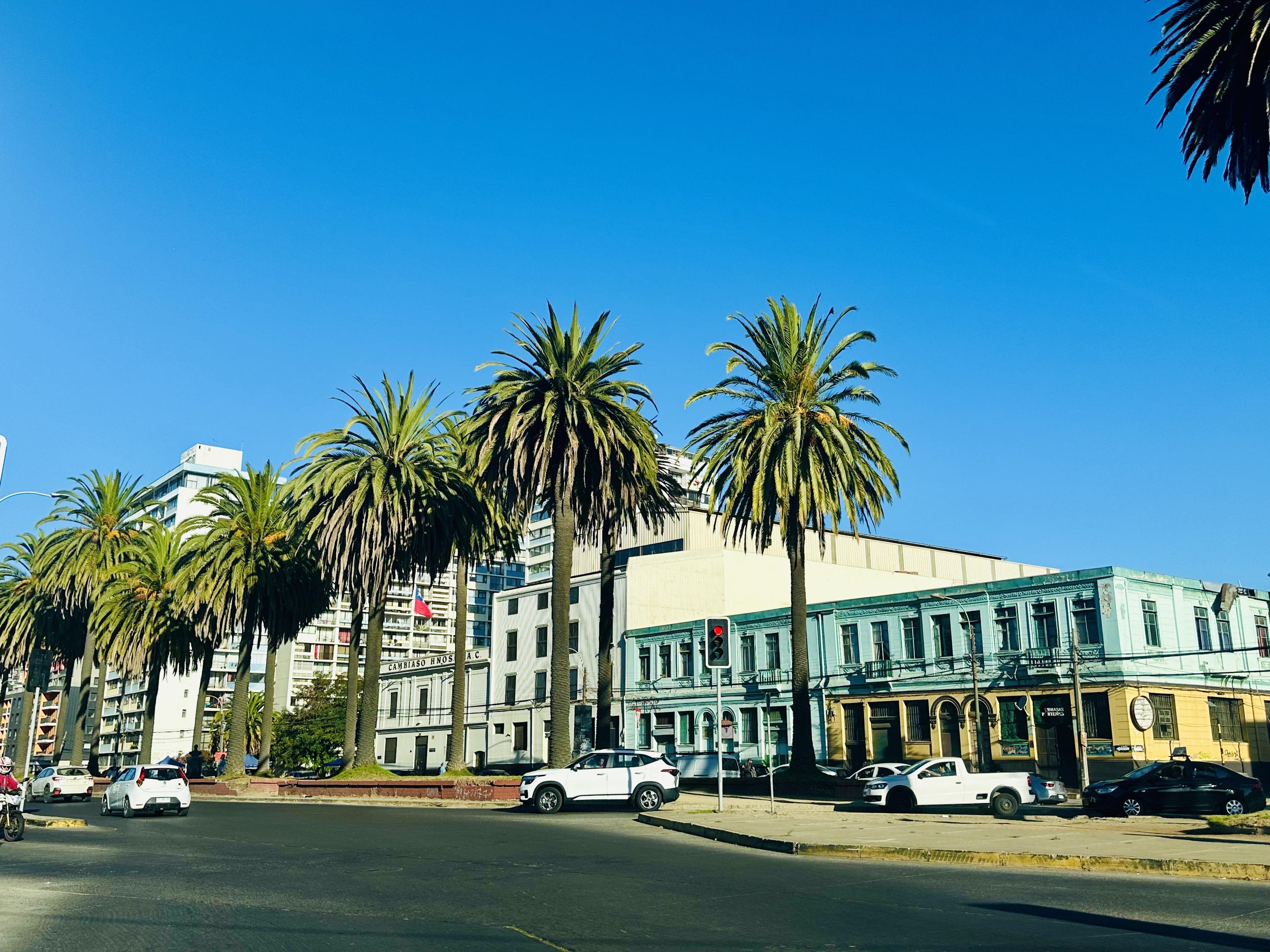
The landscape changes a bit as we are getting close to the coast. A bit more of green and palm trees.


Arriving at the picturesque city of Valparaiso!


FROM WIKIPEDIA: https://en.wikipedia.org/wiki/Valpara%C3%ADso

Valparaíso is a major city, commune, seaport and naval base in the Valparaíso RegionChile.

"Greater Valparaíso" is the second largest metropolitan area in the country. Despite only being the second largest city in the metropolitan area of Greater Valparaíso, with the first being Viña del Mar, Valparaíso serves as the namesake for the region due to its historical and cultural significance. Valparaíso is located about 120 km (75 mi) northwest of Santiago by road and is one of the Pacific Ocean's most important seaports. Valparaíso is the capital of Chile's second most populated administrative region and has been the headquarters for the Chilean Navy since 1817 and the seat of the Chilean National Congress since 1990.

Valparaíso played an important geopolitical role in the second half of the 19th century when it served as a major stopover for ships traveling between the Atlantic and Pacific oceans by crossing the Straits of Magellan. Valparaíso experienced rapid growth during its golden age, as a magnet for European immigrants, when the city was known by international sailors as "Little San Francisco" and "The Jewel of the Pacific". Notable inheritances from its golden age include Latin America's oldest stock exchange, the continent's first volunteer fire department, Chile's first public library, and the oldest Spanish language newspaper in continuous publication in the world, El Mercurio de Valparaíso. In 2003, the historic quarter of Valparaíso was declared a UNESCO World Heritage Site.


This photo of part of Valparaíso was taken from the hotel rooftop. 
The city of 300 thousand people was built on a cliff. The buildings look like they are all on top of each other, overlooking the Pacific ocean. It's a huge wall of buildings and people.


A cute visitor. 
The first of dozens of cats we have encountered here. 


My gringas (with sandals and socks) overlooking the beautiful view.


The city's art work.


This is the very fancy gate of our parking garage.


Right beside Valaparaíso, only 10 kilometers away, is another city called Viña Del Mar. This is more modern resort town, built on sea level, which makes it a completely different city. 
While Valparaíso resembles San Francisco, Viña Del Mar has a Miami Beach vibe.


Aloe Vera.


FROM EXPEDIA: One of Viña el Mar’s most famous sights is a big working clock made of flowers that bloom throughout the year. Set on a sloping lawn at the foot of Cerro Castillo is the Reloj de Flores (Flower Clock), a masterpiece of landscape gardening made using an abundance of colorful flowers. This botanical landmark is an actual working clock and was inaugurated in 1962 as part of the FIFA World Cup, for which Viña del Mar was one of the host cities. 


I absolutely love this tree on top of the rock!


Viña Del Mar has tall buildings and a great tourist infrastructure with lots of options of hotels and restaurants, but it's not as charming as Valparaiso - in my humble opinion.


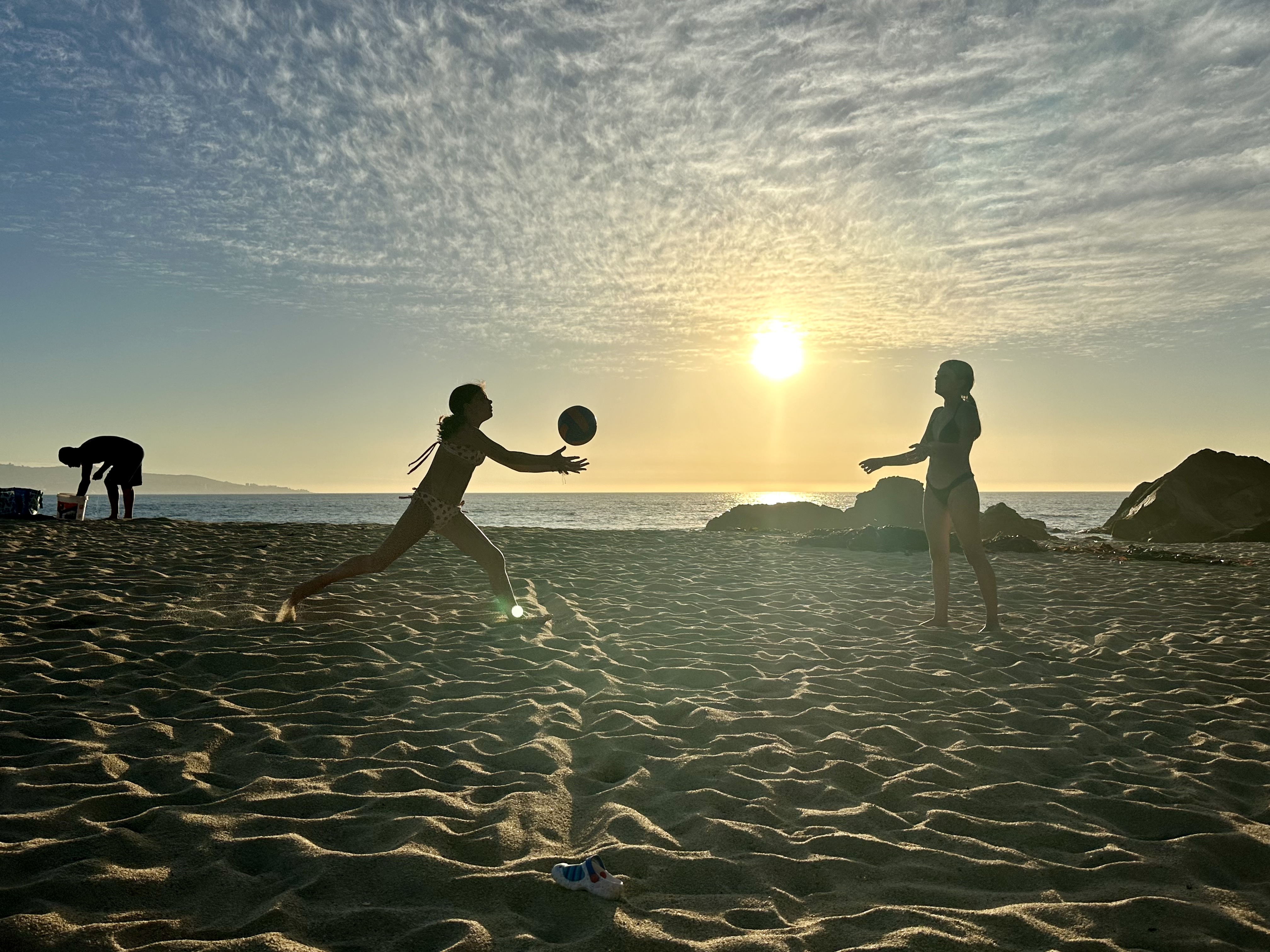
Having grown up on the east cost, I always appreciated the sunrise on the ocean, therefore I will never miss the opportunity of a sunset on the west. 
And where is the best place to be? On the beach, of course. 
The ocean was rough, so the kids could not swim, but we still had a good time on the sand, mesmerized by the beauty of the big star.


The temperature was about 8-10 degrees cooler than Santiago.


On the hills, behind them is Valparaíso.


Succulents plants are everywhere.


I will shut up now and let you appreciate these beautiful shots. 
No explanation required.


Almost gone. 


The streets of Viña Del Mar at night are busy and full of tourist walking around or eating and drinking on patios. 


A little scary moment at 10pm, when we were about to go to bed back in Valparaíso, made us leave the hotel where we were staying. It was a forest fire alarm, that turned out to be nothing, as we realized pretty soon when locals didn't move at all. But for us, if an alarm says "evacuate", we get in the car and leave right away.

After driving for a couple or hours looking for possible danger and trying to figure out what to do in case of an emergency in a foreign country, AND having a daughter extremely sick in the car with allergies from an Alpaca blanket from the hotel, we just decided to change scenery and find another hotel to spend the night... back in the very touristic place of Viña Del Mar.

We figured it would be an easier escape from there if we really needed to evacuate. Thankfully, it turned out to be a false alarm, but still I think we did the right thing leaving, after reading that another forest fire had killed 130 people in Valparaíso just a month before. Not too far from where we were staying.